Monday, July 31, 2006

Second annual Magdalene Retreat

The Second Annual Magdalene Retreat was a blessing. Here are some samplings from the retreat that will show its inspiration.


Here is the Prior, Mark Gross, OPL, giving his presentation--cup in hand and a thoughtful and prayer-provoking point being made. After each presentation, the retreatants prayed silently. You can see below the agenda for each separate part of the retreat in contemplation of St. Margaret Magdalene and her true relationship with Christ. Mark was the Retreat Master and the retreat was held at the Chapterhouse in Homedale.


Here are a few of the retreatants doing what many Dominicans do well, talk and eat! God bless them all!


Retreat attendees at the second annual Magdalene Retreat, Homedale, Idaho, Saturday, 22 July 2006.

Tuesday, July 25, 2006

Thank you!

I would like to thank the men of the St. John's Tuesday morning prayer group for volunteering to help with the concrete work!

We will meet at 6:30AM at St. John's and go to Homedale. It should be quick to finish the job with so many willing hands. May God be praised! You have melted my heart.

For a map and directions, click here


In 1913, my great-grandfather lived in Portland OR. He was known as "The gimp Gross" - Now I seem to be growing into a family tradition! I am very grateful to have volunteers to do what I can really no longer do.


After prayer group I went home and read the Divine Office, which today includes Psalm 102. Here is what I read:

Yes, the time appointed has come, for your servants love (Zion's) very stones, and are moved with pity even for her dust.

Considering for next Sunday, we discussed the miracle of the loaves and fishes, where we see Jesus moved with compassion, we can in the psalm relate that the very stones of Zion are the hearts of men, for dust we are and to dust we must return. Aware of the great mercy the Lord has shown us, we learn to show mercy for our neighbor who is loved by God who desires his friendship, as once he desired ours.

Then he will turn to the prayers of the helpless; he will not despise their prayers.

Since my help comes from the Lord, truly the most helpless are those who do not know the Lord! Yet God has made us in his image, and part of that image is to seek the good. And it is true that God seeks us before we seek him, for his grace is totally gratuitous, not merited on our part. Thus the prayer of the helpless can in one sense be thought of as the yearning of the heart of good will seeking the good (ie: God), even though the name of God is unknown. The desire for God is innate, because he put it in every heart.

Let this be written for ages to come that a people yet unborn may praise the Lord;

A people unborn is the unregenerate soul, who has not yet entered the saving waters of baptism. Unborn today, even blaspheming the Lord today, many will yet enter the saving waters and then praise the name of the Lord. Oh joy of the saints and angels of heaven, that a soul be converted!

That he might hear the groans of the prisoners and free those condemned to die.

Due to original sin, we are all born under a death sentence, prisoners to a material life under the lordship of Satan, the prince of the world. In our original ignorance we strain against this while simultaneously embracing it. But our Lord knows our weakness, and has pity on us, and helps us to receive our Savior so that we can escape that death that is eternal.

He has broken my strength in mid-course, he has shortened the days of my life.

The Lord gives, the Lord takes away. Thanks be to God.

Long ago you founded the earth, and the heavens are the work of your hands. They will perish, but you will remain.

We remember when we hear "earth," that we are but dust; and in a sense, the heavens are where God's will is done, and can be thought of as the saints who do God's will. The earth (this mortal coil) perishes, but the heavens (once regenerated, our union with God) will live forever.

God bless,
Mark

Monday, July 24, 2006

Where did Ecclesiasticus 9:10-13 go?

For our retreat on Mary Magdalene, we used the chapter from Ven Louis of Granada in his Summa of the Christian Life, found here, which contains the following:

O wisdom of God! One of the vilest things in the world is an evil woman, of whom Ecclesiasticus says that she "shall be trodden upon as dung in the way" [Ecclus. 9:10].


OK, for Ecclus 9:10-13, in the Douay-Rheims, translating the Latin Vulgate we find:

9:10. Every woman that is a harlot, shall be trodden upon as dung in the way.

9:11. Many by admiring the beauty of another man's wife, have become reprobate, for her conversation burneth as fire.

9:12. Sit not at all with another man's wife, nor repose upon the bed with her:

9:13. And strive not with her over wine, lest thy heart decline towards her and by thy blood thou fall into destruction.


Your NAB or RSV has verse 9:10ff to match the DR verse 9:14ff

If anyone knows why these specific verses have been removed, I'd like to know!

Monday, July 17, 2006

MAGDALENE RETREAT, SATURDAY, JULY 22, 2006 9:00 A.M.


The Dominicans are holding a contemplative Retreat this coming feast day of St. Mary Magdalene, as we consider her life in words and in prayer, and the true role--as contrasted to the fable role--she played in the life of Jesus Christ.

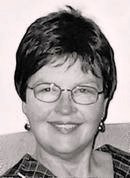
As a member of the Chapter, we honor Gwen Gross McGarvey, OPL, as she took the name of St. Mary Magdalene as her religious name when she was professed into the Order of Preachers perpetually on September 18, 2003, and the Retreat is dedicated to her, as she died on July 17, 2004. God rest her soul.

The Magdalene Retreat will held this coming Saturday, 22 July 2006 at the Chapterhouse in Homedale, Idaho.

Dresser of sycamores?

From Mike Turner OPL:

Today's first reading contained a line that was just a bit too obscure
for me to leave alone. Amos is being scolded by the priest at Bethel.
"Off with you, visionary, flee to the land of Judah!" And in Amos
7:14, Amos responds, "I was no prophet, nor have I belonged to a
company of prophets; I was a shepherd and a dresser of sycamores."

Douay Rheims says, "I am a herdsman plucking wild figs."

Strong's Concordance says, "...herdman and a gatherer of sycomore fruit."

Our Polish Bible says that he was a cutter of fruits.

The sycamore tree of Egypt is a relative of the mulberry and produces
figs. In order to bear fruit, the flowers actually need to be visited
by a wasp, which lays an egg there. But the egg causes the fruit to
be bitter, unless the young fruit is cut open and exposed to air.

It appears that this would have been a form of agricultural work --
cut the young fruit so that it will mature into tasty figs.

Here is one of several web sites that describe the marvels of the sycamore.

http://www.kinfonet.org/community/centres/sycamore/Tree.html

Enjoy!

Thursday, July 13, 2006

MAGDALENE RETREAT, SATURDAY, 22 JULY 2006


See details here:

http://www.dominicanidaho.org/Homedale/retreat_magdalene_06_07_22.htm

Lunch will be provided. There is no charge for the Retreat.


Do you need a ride? Are you able to give someone a ride to the RETREAT? If so, call John Keenan, OPL at 208,375.2532. Leave a message. He will help get a ride or use your name to give someone else a ride to the MAGDALENE RETREAT. Thank you.

Saturday, July 08, 2006

Second annual Mary Magdalene Retreat

The lay Order of Preachers in Idaho is holding its annual MAGDALENE RETREAT this coming Saturday, July 22, 2006 at the Chapterhouse in Homedale, Idaho. It starts at 9:00 a.m. We will have Mass, contemplative prayer, and share meals together. Please join us as we consider the life of St. Mary Magdalene and her true role in the life of Christ. You can see the details at the following site, and even find a map to the Chapterhouse at:

If you need more information, please call John Keenan, OPL at (208)375-2532.

Garage for Chapter House in Homedale

The work is started, finally!


More pictures and detail here

Monday, July 03, 2006

In times of trial

This from Pope Benedict XVI's homily on the feast of Ss. Peter and Paul. It contains words of encouragement for all who strive against the snares of the devil, none the least of which is the successor of Peter.


”In this Basilica erected over the tomb of Peter, a pauper’s grave...”

by Benedict XVI


And then he turned to Peter. He said Satan had demanded to sift the disciples like wheat. This evokes the passage in the book of Job in which Satan asks God for permission to afflict Job. The devil - the calumniator of God and men - wants to prove by this that true religious devotion does not exist, but that man is always and in everything looking for his own gain. In Job’s case, God grants Satan the freedom he has requested precisely in order to defend his creature, man, and himself. This is what happens to the disciples of Jesus, in all times. So often it seems to us that God is allowing Satan too much liberty, that he is granting him the ability to shake us in a much too terrible way, and that this exceeds our power and too greatly oppresses us. Again and again we cry out to God: Look down upon the misery of your disciples and protect us! In fact, Jesus continues: ‘I have prayed for you that your own faith may not fail’ (Luke 22:32). The prayer of Jesus is the limit posed on the power of evil. The prayers of Jesus are the protection of the Church. We can seek refuge under this protection, cling to it and be sure of it. But, as the Gospel tells us, Jesus prayed especially for Peter: ‘that your faith may not fail.’ This prayer of Jesus is at the same time a promise and a task entrusted. The prayer of Jesus safeguards Peter’s faith, the faith that he confessed at Caesarea Philippi: "You are the Messiah, the Son of the living God" (Matthew 16:16). Ecco: don’t ever allow this faith to become dumb, always reinvigorate it again, even in the face of the cross and all the contradictions of the world – this is the task of Peter. This is precisely why the Lord does not only pray for the personal faith of Peter but for his faith in the service of others. This is what He means when He says: ‘and you, when once you have turned back, strengthen your brothers’ (Luke 22:32).

Wednesday, June 14, 2006

Council of Nicea II: Proper Respect for the Mother of God

4. But since the salvation of our race was accomplished by the mystery of the Cross, and since the Church, dispenser of that salvation after the triumph of Christ, was founded upon earth and instituted, Providence established a new order for a new people. The consideration of the Divine counsels is united to the great sentiment of religion. The Eternal Son of God, about to take upon Him our nature for the saving and ennobling of man, and about to consummate thus a mystical union between Himself and all mankind, did not accomplish His design without adding there the free consent of the elect Mother, who represented in some sort all human kind, according to the illustrious and just opinion of St. Thomas, who says that the Annunciation was effected with the consent of the Virgin standing in the place of humanity.[5] With equal truth may it be also affirmed that, by the will of God, Mary is the intermediary through whom is distributed unto us this immense treasure of mercies gathered by God, for mercy and truth were created by Jesus Christ.[6] Thus as no man goeth to the Father but by the Son, so no man goeth to Christ but by His Mother. How great are the goodness and mercy revealed in this design of God! What a correspondence with the frailty of man! We believe in the infinite goodness of the Most High, and we rejoice in it; we believe also in His justice and we fear it. We adore the beloved Savior, lavish of His blood and of His life; we dread the inexorable Judge. Thus do those whose actions have disturbed their consciences need an intercessor mighty in favor with God, merciful enough not to reject the cause of the desperate, merciful enough to lift up again towards hope in the divine mercy the afflicted and the broken down. Mary is this glorious intermediary; she is the mighty Mother of the Almighty; but-what is still sweeter -- she is gentle, extreme in tenderness, of a limitless loving-kindness. As such God gave her to us. Having chosen her for the Mother of His only begotten Son, He taught her all a mother's feeling that breathes nothing but pardon and love. Such Christ desired she should be, for He consented to be subject to Mary and to obey her as a son a mother. Such He proclaimed her from the cross when he entrusted to her care and love the whole of the race of man in the person of His disciple John. Such, finally, she proves herself by her courage in gathering in the heritage of the enormous labors of her Son, and in accepting the charge of her maternal duties towards us all.

15) If anyone shall not confess the holy ever-virgin Mary, truly and properly the Mother of God, to be higher than every creature whether visible or invisible, and does not with sincere faith seek her intercessions as of one having confidence in her access to our God, since she bare him, let him be anathema!

Tuesday, June 06, 2006

MAGDALENE RETREAT, SATURDAY, 22 JULY 2006

The Blessed Margaret of Castello, OP Chapter is sponsoring a Retreat on July 22, 2006 at the Dominican Chapterhouse in Homedale, Idaho. Please check the website at http://www.dominicanidaho.org/ for more information and for a map to the Chapterhouse. More information will be posted here very soon.

The Da Vinci Code/Hoax. You've heard the lies. We hope you've heard the truth. A day of prayer and meditation on the feast of Mary Magdalene, in reparation for the offense given Our Lord.

YOU ARE INVITED.

Don't Touch My Hand

From Mark Gross, OPL, when he first became a Catholic nearly 9 years ago, Fr. Ritchey had this delightful item in the bulletin during Mark's first year as a Catholic:

"Not long ago, someone asked me 'Father, do I have to hold hands with those around me during the 'Our Father.'' I had to answer 'no, you do not have to.' People holding hands during the Lord's Prayer or people holding up their hands in the 'orantis position' is not part of the Roman Rite. Holding hands, or holding one's hands up during the Lord's Prayer is a tradition that came from different movements in the Church like Search, Cursillo and charismatic prayer groups. People then brought those customs or expressions to the Sunday liturgy with them. Holding hands or holding your hands up in prayer during the Lord's Prayer is neither mandated nor forbidden. I personally do not like to hold hands with anyone during the Lord's Prayer. But that is okay, I am standing behind the altar by myself. As for everyone else, do as you please, but do not impose yourself on those around you. I used to struggle with the spiritual bullies that insist on holding my hand, whether I like it or not. On the other hand, it would not be a very Christian act to snub the person next to you when they try to reach for your hand. Maybe they could use a human touch. It is a delicate situation that calls for charity and sensitivity.

God bless, Fr. Tim Ritchey
Sunday Feb 2, 1997
Feast of The Presentation of the Lord"

Thursday, May 25, 2006

Stone setting

Tuesday we gathered with Kathleen

For the delivery of the marker for Jim Schuck OPL

Which is beautiful!


Eternal rest, O Lord, grant unto your servant Jim.

Tuesday, May 16, 2006

Benedict 16 catechesis on Christ and His Church

During his weekly Wednesday allocution, the pope has been teaching on the relationship of Christ and His Church. This item is from last week.

Tradition, is the history of the Spirit at work in the history of the Church through the mediation of the apostles and their successors, in faithful continuity with the experience at its origins.

Pope St. Clement of Rome made this clear toward the end of the first century. “The apostles,” he wrote, “proclaimed the Gospel to us and were sent by our Lord Jesus Christ. Jesus Christ was sent by God. Christ, therefore, comes from God and the apostles come from Christ: Both proceed in an orderly way from God’s will. …Our apostles knew through our Lord Jesus Christ that disputes would arise regarding the office of bishop. Therefore, perfectly foreseeing the future, they established who were their chosen ones and ordained them so that at the time of their death other men of proven virtue would assume their service” (Ad Corinthios, 42.44)


Pope St. Clement was a disciple of St. Peter. The full letter to the Corinthians can be read here:

http://www.newadvent.org/fathers/1010.htm

Friday, May 12, 2006

Old friends


Before Easter I went to the Chrism mass in the neighboring Diocese of Baker City, where I ran into these two old friends from Boise parishes. Father Urassa and Father Chilogoram send love and greetings to all!

problems posting

I've not posted anything for a while because my computer does not seem to be able to post. I'm trying from another computer ... Hopefully this problem too will pass!

Friday, March 31, 2006

Formation director disentangles...

Today we give thanks to God that John has started his new job as a Deputy Attorney General! Way to go!

On March 28, John Keenan, myself, with the assistance of Matt Keenan, Will Gross, and Kaleb Boyer took down about a quarter mile of old barbwire fence, which we cut up and put in a trailer to haul to recycler.

Somehow this work event seems a parable for John's disentanglement efforts; God be with you!

Thursday, March 23, 2006

Humbert of Romans

finally finished the transcription of Treatise on Preaching (see link at right). It ends with:

PRAISE BE TO GOD!

TO THE BLESSED VIRGIN MARY!

AND TO ST. DOMINIC, THE ILLUSTRIOUS

FATHER OF PREACHERS!

AMEN.

Saturday, March 18, 2006

The parable of the prodigal son

Something of St. Augustine that I read quite some time ago finally sunk in today! Perhaps it was because the Church in her wisdom links Luke 15:1-2 with the prodigal son parable Luke 15:11ff (the 'bookends' thing).


Luke 15:1-3; 11-32
Parables of God's Mercy
------------------------
[1] Now the tax collectors and sinners were all drawing near to hear Him (Jesus). [2] And the Pharisees and the scribes murmured, saying, "This man receives sinners and eats with them."

The Prodigal Son
----------------
[3] So He told them this parable:
[and you know the rest of the story!]


St. Augustine, commenting on verse 1 and 2, made an interesting observation. Since under the old law, to touch a leper was to be unclean, but for Jesus to touch a leper was to heal him, to touch a dead body was to become unclean, and also when Jesus touched the dead they came to life. Likewise, the sinner, in the company of the Lord, repented and became a new creation in the Lord. Thus, the Pharisees, seeing the old and not aware of the new persons they had become, are actually in error in their accusation, as we err if we agree with them.

Here is the connection: Jesus chooses not to say “you err in what you say,” but instead instructs by parables. At one level, the prodigal son parable can be seen as an instruction for the Pharisees who have falsely accused Jesus of receiving sinners, for their judgement is of the old man, the prodigal still serving the swine; they are unaware of the repentance of the son who returns to the father; in this they are figured by the older brother in the parable.

In the fuller sense, there are three parables; the shepherd searching for the lost sheep, the prodigal returning, and the unjust steward. Thus, Jesus explains in the first what He does (searching for the lost sheep and bringing them back), in the second, the effects of grace on the soul of the lost (the prodigal), and in the third, what he expects of His stewards (once the pharisees, now the pastors). Rather wonderful!

Thursday, March 16, 2006

“Credo Apostolicam Ecclesiam”: Wednesdays in Saint Peter’s Square

The pope has closed the Wed catechesis started by JPII... description and text from Sandro Magister (click for entire text):


But for the new cycle of catechesis, which began on Wednesday, March 15, pope Ratzinger has chosen as his theme “the relationship between Christ and the Church, considering it from the experience of the apostles.”


--------------------------------------

”Between Christ and the Church there is no opposition”
by Benedict XVI


In a certain sense, we could say that the last supper is precisely the act of founding his Church, because he gives himself and in this way creates a new community, a community united in the communion with himself. From this perspective, it is understood that the risen one grants them, with the pouring out of the Holy Spirit, the power to forgive sins (John 20:23). The twelve apostles are in this way the most evident sign of Jesus' will over the existence and mission of his Church, the guarantee that between Christ and the Church there is no opposition: (Italics added) They are inseparable, despite the sins of the people who make up the Church.

Therefore, there is no way to reconcile Christ's intentions with the slogan that was fashionable a few years ago, "Christ yes, the Church no." The individualist Jesus is a fantasy. We cannot find Jesus without the reality that he created and through which he communicates himself. (italics added)

Between the Son of God, made man and his Church, there is a profound, inseparable continuity, in virtue of which Christ is present today in his people.

He is always our contemporary – our contemporary in the Church built upon the foundation of the apostles. He is alive in the succession of the apostles. And his presence in the community, in which he himself always gives himself, is the reason for our joy. Yes, Christ is with us, the Kingdom of God is coming.

Construction notes

Chapter member Kathleen Schuck has donated her garage to be moved to the Chapter property. This week we have had a pad leveled and graveled, as well as long overdue road maintenance. This picture shows Clint in the big cat!

Thursday, March 09, 2006

Venial Sin

From Divine Intimacy, by Fr. Gabriel of St. Mary Magdalene O.C.D.
-----------------------------------------------------------------
St. Teresa of Avila says, “For the love of God, take care not to commit any deliberate venial sin, even the smallest. … And can anything be small if it offends God? (Con 2 – Way 41).

2. Quite different are the venial sins which we commit through frailty or inadvertence. Very often the soul is determined not to give in at any price; due to its weakness, however, it falls when temptation comes, especially if the attack is unexpected. Nevertheless, once aware of it, the soul feels sincere sorrow, repents at once, asks God’s pardon, rises, and sets out again. Such sins cause no great harm to the soul; they are signs of its frailty and show that it has not yet reached spiritual maturity. Moreover, if the soul sincerely humbles itself after these falls, it will draw profit from them and a more profound knowledge of its own misery, which will make it mistrust its own strength entirely and place all its confidence in God alone. It will experience in a practical way the profound truth of the words of Jesus, “Without Me you can do nothing” (Jn 15:5). It is not unusual for God to permit these falls, and He does so precisely to give the soul this practical knowledge of its nothingness, and to anchor it firmly in humility, the foundation of all our spiritual life.

In regard to faults of this kind, St. Therese of the Child Jesus felt that we can be sure “they do not grieve the good God,” because they are not caused by a will intent on sin, by indifference or by coldness; they spring from the weakness of human nature.

If because of our weakness it is impossible for us to avoid these little daily venial faults of inadvertence or frailty, it is important to know how to detest them and to make generous reparation. As to deliberate venial sins, we should be firmly resolved not to commit them for anything in the world.

Friday, March 03, 2006

How are Christians to resolve disputed issues?

One of the protestant traditions, first articulated by Martin Luther, holds to this day that the final authority is the Bible for resolving issues of doctrine. From the bible they usually support this position with “All scripture, inspired of God, is profitable to teach, to reprove, to correct, to instruct in justice” (2 Tim 3:16). It usually fails to convert those who hold to this error by pointing out that the scriptures spoken of here are what we know as the Old Testament only, or that Holy Scripture itself says “...the house of God, which is the church of the living God, the pillar and ground of the truth” (1 Tim 3:15), and even though Jesus said that the way to resolve an issue is to take it to the Church: “But if thy brother shall offend against thee, go, and rebuke him between thee and him alone. If he shall hear thee, thou shalt gain thy brother. And if he will not hear thee, take with thee one or two more: that in the mouth of two or three witnesses every word may stand. And if he will not hear them: tell the church. And if he will not hear the church, let him be to thee as the heathen and publican” (Mt-18:15-17).

Here is an additional argument I haven't heard before; an argument from reason, that “whore” according to Martin Luther who should be trusted with nothing (even though, oddly, it is the only thing Sola Scriptura protestants depend on). The point being that before St. Paul wrote their favorite passage in Second Timothy, he had already demonstrated convincingly that Scripture alone was incapable of resolving a conflict. If you recall in chapter 15 of the Book of Acts, there was a conflict about the necessity of circumcision. Some, relying on the scriptures, claimed it was necessary for gentile converts to be circumcised and obey the Mosaic law. Paul and Barnabas had disputed this. How did they resolve it? They went to Jerusalem, where what happened? Was the issue resolved by turning to Holy Scripture? No, it was resolved by authority of the Holy Spirit speaking through the Church. “And when there had been much disputing, Peter, rising up, said to them: Men, brethren, you know that in former days God made choice among us, that by my mouth the Gentiles should hear the word of the gospel and believe. And God, who knoweth the hearts, gave testimony, giving unto them the Holy Ghost, as well as to us: And put no difference between us and them, purifying their hearts by faith. Now therefore, why tempt you God to put a yoke upon the necks of the disciples which neither our fathers nor we have been able to bear? But by the grace of the Lord Jesus Christ, we believe to be saved, in like manner as they also. And all the multitude held their peace” (Acts 15:7ff).

The protestant argument falls apart, not just because it is contradicted directly by scripture, but also because St. Paul has demonstrated that it is insufficient alone to be used in the context of resolving doctrinal disputes.

Monday, February 27, 2006

Humbert of Romans, chapter 4 gems

A couple of gems to give one something to think about...

But it is also a duty of the preacher to be more vigorous wherever the malice is greater. When perversity increases, says St. Gregory, preaching must not weaken, but on the contrary, it ought to become more vehement.

Interesting... instead we have pastors advocating perversity! go figure...

This quote is a good reminder of the relation between the works of mercy as it applies to a preaching order.

There are some who with love apply themselves to works of corporal mercy, but preaching, because it devotes all its zeal to the salvation of souls in danger of death, surpasses in excellence the above mentioned works, as the soul surpasses the body. For this reason Our Lord said to him who wished to bury his father: “Leave the dead to bury their own dead, but do thou go and proclaim the kingdom of God” (Luke 9:60). So that if it is necessary, according to this command, to place preaching above the duty of burying one’s father, one of the most pious of corporal works of mercy, how much more should preaching in general be placed above all the works which have as their object only the well-being of the body. Whoever by his word nourishes souls with everlasting food does more, St. Gregory observes, than he who gives material bread in order to preserve the life of the body.

Life of St. Dominic

I should have chapters 4 & 5 of Humbert of Romans on line later today. For now, here is a treat Mike Turner provided.


From "Life of St. Dominic" by Lacordaire, pp. 175-176

In the spring of the year 1219, the Friars continued to multiply; thanks to the preaching of Reginald, the renown of their virtues, and the wonderful and repeated interpositions of Providence. A student at the university [in Bologna] was called in the following manner. When asleep one night, he seemed to be alone in a vast field, when a violent storm arose. He ran to the nearest house, knocked, and asked for shelter; but a voice replied, "I am Justice, and because thou art not just, thou shalt not enter my abode." He then knocked at another door, where another voice answered, "I am the Truth, and cannot receive thee, because Truth shelters none but those who love her." He applied elsewhere, but was repulsed with the words, "I am Peace, and there is no peace for the wicked, but only for the man of good-will." Then he knocked at one door more, and a person opened it, saying, "I am Mercy; if thou desirest to escape the tempest, go to the monastery at San-Niccola, where the Friar Preachers dwell; there thou wilt find the stable of penitence, the crib of chastity, the food of doctrine, the ass of simplicity, the ox of discretion; Mary, who will enlighten thee; Joseph, who will aid thee; and Jesus, who will save thee." On this the student awoke, and regarding his dream as an admonition from Heaven, complied with its admonitions.

Tuesday, February 21, 2006

Treatise on Preaching (3)

Humbert of Romans, Treatise on Preaching, chapters 1, 2, 3, and part of 4 are now on line here.

A gem in Chapter 3... An explanation of the cryptic scripture about eagles gathering around a carcass (Luke 17:37, Mt. 24:28)

Thursday, February 16, 2006

Suffering

In meditating on the effect of suffering on the soul, it seems that in suffering one either draws closer to God, or runs further; time of crisis is a "window of opportunity" that in the good times we don't usually find. Since God is spirit and the soul is spiritual, to "see" God means to "know God," and God desires to be known, but we most of the time are too busy to stop and look, in the recesses of our soul, for the still quiet voice of God. The soul is our "window" to God, because we are made in His image, thus spirit looks to spirit to see reflected He Who is in whose image we are made. But our soul, often stained with sin, gives a poor reflection, and we flee what we think we see. In suffering, however, the opportunity to withdraw from the flesh presents itself, for we are lost to our own power, and turn to His power to help us, and we seek His help to clean that window of our soul. Suffering is the solvent, the "windex," so to speak, which helps us to see. Thus some saints would say "If you only knew the joy in suffering, you would ask for nothing else."

Wednesday, February 15, 2006

Treatise on Preaching (2)

I obtained copyright permission to transcribe Treatise on Preaching by Humbert of Romans and place it online. I've finished the first chapter, and you can read it here.

Thursday, February 09, 2006

New baby...


Congratulations to Abe and Tammy Alsop for the birth of Emilia Anne!

Monday, February 06, 2006

Treatise on Preaching

Humbert of Romans was the fifth Master General of the Order of Preachers (1254-1263). He died in 1277. His book, Treatise on Preaching is a classic. I've transcribed a bit of the first chapter, which can be read here.

If I can identify the current copyright holder and obtain permission I will try and transcribe the whole of this short book.