Subject: True and false offense
In a comment I stated that "Offense taken is not prima facie evidence of offense given." I would like to elaborate on this, using a couple of concrete examples.
Let us first consider those who say that they suffer great pain by the words "Our Father, who art in heaven..." and substitute "Our God, who art in heaven; or, in a similar vein, in the creed, instead of saying "...for us men and for our salvation..." they say "...for us and for our salvation..."
Now I do not doubt that there is suffered an anguish here, and I'd like to explore that. In these cases and those which are similar, there is a refusal to understand what is contained in the words of the creed and the greatest prayer, and an adherence to the particular error, preferring their own opinion over the deposit of the faith. In other words, there is no possible offense offered, and the individual taking offense is only demonstrating their own stubbornness in preferring their own opinion over that which is true.
Now there is also the case where offense is rendered, but without realizing it. To demonstrate, I will use the same example. The person who refuses to call God Father, is attempting to correct the very name God has given us whereby to know Him. The person who changes the inclusive language of "for us men and for our salvation" (ie: all mankind), in substituting the exclusive language of "for us and for our salvation" (ie: we gathered here only), is committing an error of great magnitude, since the creed explicates what we believe.
In sum, often people do not understand that they are giving offense, and people take offense where none is given. In both cases it is truth that is offended against by error, and as Leo XIII said, error has no rights.
For a moment, I’d like to consider the lot of a patient in the hospital. Let us assume that the doctor orders a drug to be administered by injection; the patient needs a shot. The CNA, who takes temperature and blood pressure every few hours does not administer the medication, but the nurse does. Is this an insult to the CNA? No, and it would be absurd to take it as such. Is it an insult to the nurse that the doctor must place the order for the injection? Of course not. No one would question that the CNA, the nurse, and even the doctor are of equal dignity as persons, but one would be a fool to consider them to be the same in their professional responsibilities; there is a hierarchy of authority and work, and without it, the entire system of care would collapse.
Now let’s consider what was offered by the deacon as an “offense” against the laity, and ask if it actually is. In this hospital of souls known as the Church, the Church experimented with extending a specific task to a group which had never done it before, and now has announced that the experiment will not continue. There is a division of labor, and there are reasons for this division of labor. Now to believe that it is somehow an affirmation that one group is better than another, based on a division of labor, is to read into said division that which is not there. I will grant you that there may be clergy who think they are better than laity, just as there are doctors who are jerks and think they are better than nurses; but equal dignity of persons is what we adhere to, while recognizing that there are different tasks proper to different vocations. Abuse does not negate the necessary use.
By insisting that we were being “slapped in the face” by the Church in this ruling, the Deacon demonstrated a profound lack of understanding of this ruling. On the other hand, to take the time meant for a homily, and instead, deliver a very strong statement exalting his personal opinion above and against that which the Church has ruled, did two things. First, as an officer of the Church, he spoke not as a deacon of the Church, but as an individual who had crossed a line between himself and the Church (because he spoke for himself, not the Church). Second, he deprived the faithful of a homily explicating the scriptures and how to live them. I find it remarkable that there is so much talk of justice, but so much injustice to the faithful, ie: failing to render what is due.
So, in this recent situation, there is a twofold case of offense taken; on the one hand, but those deeply offended and hurt by the deacon’s words, and on the other, those offended and hurt by what I did, or, more to the point, by what they understand and think that I did, and their perceptions of the motives with which it was done.
In comments, motives have been attributed to me which simply are not so. Those who know me, understand this. We are constantly exhorted to be open to and docile to the promptings of the Spirit, and to do what the Lord asks of us. In my prayers for our beloved Deacon (who is a remarkably good speaker, by the way), I begged the Lord for what is best for the Deacon; and the answer was rather terrifying. You may not believe that the answer which I acted on was from God, and I certainly questioned it as well. The reason I mentioned those who know me, is I do not think it was my own choice for the very simple reason that is was as out of character for me, as joyful obedience would appear to be for Deacon, may God bless and assist him.
I will offer the suggestion that anyone who was not offended by the Deacon’s words and actions, doesn’t understand the magnitude of the offense committed, which is certainly forgivable. If I am wrong on this, I stand open to correction.
Monday, January 22, 2007


Is obedience repugnant?
O Jesus, […]
Is obedience repugnant to me? I behold you, my God, obeying Mary and Joseph, Your Creatures, and submitting with the meekness of a lamb to Your judges and executioners.
- St. Catherine of Sienna, quoted in DIVINE INTIMACY, #57, "I Am The Way", Fr. Gabriel of St. Mary Magdalene O.C.D.
Is obedience repugnant to me? I behold you, my God, obeying Mary and Joseph, Your Creatures, and submitting with the meekness of a lamb to Your judges and executioners.
- St. Catherine of Sienna, quoted in DIVINE INTIMACY, #57, "I Am The Way", Fr. Gabriel of St. Mary Magdalene O.C.D.
Friday, January 19, 2007
Smyrna
My Microsoft Windows update came today, posted from Smyrna, TN.
Smyrna... best not forget:
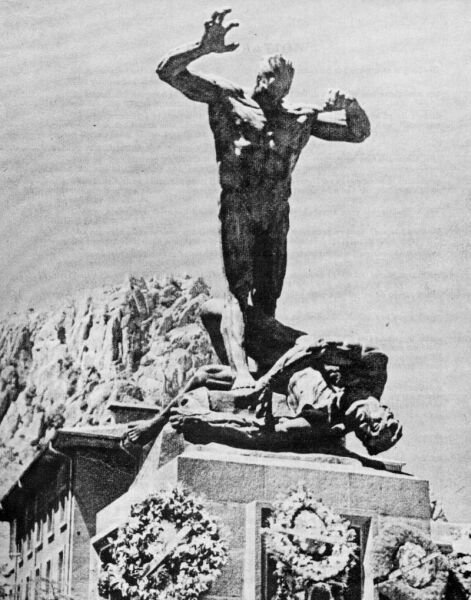
The Turkish monument at Afion Karahissar for the victory and extermination of their enemies.
Uh, that would be us, folks...
Smyrna... best not forget:
The Turkish monument at Afion Karahissar for the victory and extermination of their enemies.
Uh, that would be us, folks...
Thursday, January 18, 2007
Vatican II documents
Dear Deacon suggested reading the documents of Vatican II (actually, he recommended reading the Catholic Update sheets, which I wouldn't recommend for fire starting or emergency TP). Anita did just that (I mean, started reading the actual Vatican II documents), and as done a marvelous job extracting a few pertinent items.
Betcha Didnt Know Vatican II Said This
Nice work!
Betcha Didnt Know Vatican II Said This
Nice work!
Lighter side
A picture worth a thousand words (so I'll spare you!),
First is inspired by the Curt Jester and The Lair of the Catholic Cavemen,
the second from Fr. Gonzales' blog, Overheard in the Sacristy


First is inspired by the Curt Jester and The Lair of the Catholic Cavemen,
the second from Fr. Gonzales' blog, Overheard in the Sacristy
Wednesday, January 17, 2007
Real Presence
There are many Catholics, aparently including clergy and catechists, who believe that there is no difference between the REAL PRESENCE of Christ in the consecrated species, and the presence of Christ in the priest, the proclaimed Holy Scriptures, and the gathered assembly, a presence which the Church calls "real," but fundamentally different from that of what we refer to as the Real Presence in the eucharistic species.
The first time I encountered this, shortly after entering the Church, I was profoundly shocked; the catechist at my children's first communion class, based on Richard McBrien's book, "Catholicism," was teaching the children that all four of the above "presences" were exactly the same. After providing authoritive documentation to her, she conceded the error, but said she'd continue teaching it because she liked it better!
And Sunday the logical fruit of this error shows up with a deacon genuflecting to the congregation.
Here are some thoughts I have had on how to distinguish these presences.
If I am standing in the room with you and talking to you, you would be in my Real Presence; you are directly in the "presence" of the reality of my being.
Let us assume that instead of talking to you in the same room, I am speaking to you over the phone. Clearly, you are dealing with a "presence" that is me and that is real. But I am not in the room with you...
Let us further assume that I have something to tell you, but leave a message on your answering maching. I think we all can see that there is something of me captured in the recording, a something, a "presence," that is available to you when you listen to it, and that something is real, but it is clearly not me!
What I write here is similar, I pour a bit of my heart out in love for all those whom I pray will be my neighbor in the hope that we may spend eternity together in heaven, and for those who read what I write, certainly you have access to something, a bit of my presence, but you would have to come here to be in my presence.
It should be very clear that there is a fundamental difference to being in the same room speaking with me, and the other forms of communication (phone, recording, writing), all of which make something real of me present, but do not make the totality of what is me present.
The error which dear deacon based his act on is a superficial reading of "you are what you eat." - much has been written about the "divinization," the transformation of the lower into the higher by Holy Communion. This is a meditation deserves a far greater deal of prayer and meditation than I have completed thus far, and I'm not quite ready to tackle it in the spirit that is needed. Forgive me. To discern how to explaing how the terminus of being an "Alter Christus" does not make us God(s?), I will defer for the moment and get back to. It seems that it should be profoundly obvious that we are not Mormons who believe man becomes God, and that there is more here that such a simplistic understanding. That is I guess why such an understanding coming from clergy is so, well, unexpected (not to mention outrageous).
More on ressurifix
Michael posted a comment on the ressurifix post a while back; comments do not show dates, so I don't know when it was posted, but it is an honest question and I will offer a reply here. Michael asks:
Forgive my ignorance, but why does the position of the corpus matter? It seems to me to be a matter of aesthetics and has never affected this convert's devotion to Our Lord in the Eucharist even a bit. (If they were inverting the corpus, changing His gender, or placing Him face down, THEN I'd have issues with it. At that point it would have ceased to be aesthetics and become blasphemy.)
Michael,
You ask why it matters. Please consider for a moment; why have a cross or crucifix or such in a church at all, especially in the context of the Holy Sacrifice of the Mass?
I would hope, that even to ask such a question, suggests the answer; The crucifix is a visibly symbol of the reality of the sacrifice of Christ, which is made present on the altar in the Holy Sacrifice; we are literaly present at the crucifixion; the rules of time and space being "bent" by the power of God.
That the Church has said that a crucifix must be displayed (G.I.R.M. #308) during mass, only obliges us to do what in love we should have no difficulty doing!
Now back to your question. You ask why the corpus matters. My first answer is that the Church has said it does, and explicitly stated that it must be of Christ crucified; who in their right mind would presume to know more than Holy Mother Church, to whom the regulation of such things belongs? To do otherwise is to take authority over things that are not ours; that is the original definition of word "arrogance" - for to "arrogate" is to usurp an authority not granted to one.
Authority is good, but understanding is available as well, and I believe that is what you are seeking, and that is why I am writing this, may God grant you to rest in the knowledge and love of His crucified Son, Who died for us and Who comes to us on the altar!
You expressed concern about declining belief in the Real Presence, and this is a very serious thing. Also a convert, my former Episcopal parish had a bare cross. Jesus does not come on the altar there, there is no "Real Presence" there. Today they have even replaced the bare cross with a banner that has New-Age symbols on it! You and I, as converts, KNOW WHAT IS HAPPENING ON THE ALTAR! But the unfortunate reality is that there are many, many cradle Catholics who apparently have from no idea to a very poorly formed idea; and for them, all the symbols are an integral part of their ongoing catechesis.
If Holy Communion is only a meal, then throwing open the doors to everyone, excluding no one, actually makes sense; but this is the Holy Sacrifice, and the symbol is intimately tied to the action.
When you look at a crucifix, what is it a symbol of? There is no ambiguity, it is a symbol of the crucifixion and death of Christ on the cross, an historical reality, a reality made present on the altar.
But when you look at a ressurifix, what is it a symbol of? To me it might mean one thing, to you another, and to someone else, something else. But what it is not a symbol of is the crucifixion and death of Christ, which is what Holy Mother Church has decreed is a symbol that must be visible to the faithful during the Holy Sacrifice of the mass.
Michael, I hope this is helpful, and I will be pleased to continue this with you if I have not succeeded in conveying to you the answer to your question. Let us always seek the Lord, who wills to be found.
"Now this is eternal life:"
"Now this is eternal life:
that they may know Thee, the only true God" (Jn 17:3)
O Jesus, it is certainly deplorable that the world is not interested in knowing You and Your Father; but the offense would be beyond imagination if a soul consecrated to You should act in this way, or should be satisfied to know You only superficially!
O Lord, reveal Yourself to my soul, because I want to know You in order to love You, to serve You and to regulate my life according to Your wishes. "O God, when a woman in the world is about to marry, she knows beforehand whom she is to marry, what sort of a person he is and what property he posesses. Shall not we, then, who are already betrothed, think about our Spouse...who is His Father, what is the country to which He will take us, what are the riches with which He promises to endow us, what we can do to give Him pleasure, and how we can conform our character to His? O my Spouse, must we, then, make less account of You than is made of men?" (Teresa of Avila, Way of Perfection, 22")
Todays reading from DIVINE INTIMACY, Fr Gabriel of St. Mary Magdalene O.C.D., #52
Sunday, January 14, 2007
A supercilious Deacon
Can it be? Can contempt exceed arrogance? Can arrogance exceed ignorance? Many years ago, I was contacted by a group of people in their early twenties. They were couples-engaged couples- attending Engaged Encounter. It was their weekend. Their time. They needed to get to know each other better as friends and as future spouses.
It was also time to learn the Truth. What was does the Church teach? What is expected of each spouse? Of husband? Of wife? Of friendship? Of sin? Of life? Of babies? Of families? How do couples honor each other and the Truth as well and live faithfully? This is a genuine place to learn, that is Engaged Encounter. At this particular session a particular Deacon was in charge. These couples told me this Deacon's modus was irreverant, his dress was sloppy, his words were rank, his attitude arrogant, and his modus permissive. He allowed engaged couples to be together in the same room at night at the Church retreat center in Boise. They were deeply scandalized. Deeply. They reported the scandal to the appropriate person at the Diocese.
In time, would such disdain for the Church, Her teaching, and such poor example change. It appears not? Most recently, particularly on Sunday, 14 January 2007, it repeated itself. No, this was not another Engaged Encounter. Far from that. The same attitude showed itself at Mass. The Deacon gave a homily. He said that Vatican II gave a a certain primacy of the laity over the heirarchy, in effect that there was no real difference between the ministerial priesthood and the priesthood of the believers.
The dear Deacon blasted "Rome" for stating that the laity could no longer purify the Communion vessels used at Mass--warning us that so many little things will add up to big things.
His message sent shards of pain into the minds, hearts, and souls of many of the faithful in attendance. Scandal wound its way. In the end, he genuflected to the congregation. stating they were made in the image of God. Yes, the lay people and myself included are made in His image. Genuflect? Not right. This is not a democracy. The lay people are integral to the Church. The heirarchy as well. We don't genuflect to each other or to the bishops, but to the Real Presence. His gesture was quite audacious.
He warned many to read the documents of Vatican II. That my dear Deacon, many, many people have done. The "spirit" of Vatican II and the silliness that followed in the 1960s and 1970s is dying away, and with this coming generation the ideas of dissent will wane as well. So, the new generation is coming where a new springtime in the Catholic Church will arise, the faith will spread, and the politics of dissent, divide, and dismantle will set aside.
So with the scandal behind us, with the hope of Heaven ahead of us, we move on to the next day, pray for the Faith of this supercilious Deacon, and pray that the Faithful will remain always so to Him.
In closing, if there be a new reformation, it will likely be based on this Deacon's obervations , that Rome just doesn't get it and because it just doesn't get it, and in accord with that conclusion, there will be a new church--a new reformation. Umpteen million have said this and done this--old story, new version. This justification for a new reformation will come from lesseer minds as there will be little intellect behind it and certainly no soul as well.
 , that Rome just doesn't get it and because it just doesn't get it, and in accord with that conclusion, there will be a new church--a new reformation. Umpteen million have said this and done this--old story, new version. This justification for a new reformation will come from lesseer minds as there will be little intellect behind it and certainly no soul as well.
I pray that whatever happens, that that all souls may turn to God, seek repentence, and find the way of Truth in charity.
Striking a deacon
This morning for mass we were treated not to a homily, but to a diatribe against the Church; the occasion being the ending of an indult allowing laity to purify sacred vessels. it was an overt call to disobedience; the Church is wrong, I'm right, ad nauseum.
I have suffered much grief in the last few years, and this has been difficult, but this man was displaying such incredible ignorance, capped with an arrogance that was insufferable. He insulted my Mother, the Church!
At the consecration, the priest, no beacon of orthodoxy, chanted it beautifully, such that it brought tears to my eyes. After communion, with a heavy heart praying for our priests and deacons, the theme of obedience, what the homily should have been about, brought me the sense of the necessity to remind the deacon of his confirmation by a repeat of the bishop's slap.
But Lord, I cannot do such a thing! So after mass I went to the tabernacle and read the Divine Office; if you've read it today, it is Ignatius of Antioch on holy obedience! So I sang the Salve Regina and went downstairs.
Where I found the deacon...
I approached him and said that I was sorry that he found it such a hardship to serve the faithful, asked if he remembered his confirmation, and smacked him on the cheek; not gently, but I haven't the strength for a serious blow (flies walk away from the swatter after I hit them). The discussion got heated, he accused me of not reading or knowing scripture, not following Jesus, not this, not that, blah blah blah. For someone who doesn't even know me, I found that rather presumptuous, but missed the opportunity to call him judgemental.
I for my part said I could give a tinkers twiddle what his opinions were, they had no place on the altar. His errors were so profound, and his pride so profound, I realized that there was a reason yesterday Anita quoted me the scripture that says "a single word of reproof is sufficient for a wise man, but a fool doesn't learn from a hundred beatings."
This deacon thinks we should genuflect to each other, but not to Jesus in the tabernacle! This he did at the end of his "homily," genuflected to the congregation! We're Jesus, don't you know? (some people laughed).
His final words; more members of the congregation agree with him than me (and that deserves a boast?), and that if the reform of the reform continues, there will be another "Reformation!"
Amazing. absolutely amazing.
Lord, where are the shepherds?
St. Turibius, pray for us.
Saturday, January 13, 2007
New title
A certain faction in the LPC doesn't want us to use T.O.P., finding that somehow unacceptable, and strangely, insisting on conformty! To those who oppose different titles for different ministries/orders because they think it denotes one as better than the other, and do not have a sense of their equal dignity as children of God, perhaps therapy is the answer.
I found another title; how's this?
thanks Theocoid!
I found another title; how's this?
 | Milord Earl Mark the Disheveled Subversive of Giggleswick on the Naze Get your Peculiar Aristocratic Title |
thanks Theocoid!
Friday, January 12, 2007
ST ALPHONSUS TURIBIUS
ST ALPHONSUS TURIBIUS, CONFESSOR, ARCHBISHOP OF LIMA—1538-1606
Feast: March 23
So OK, it's not March, but S. Turibius was S. Rose of Lima's bishop. Such a bishop!
Feast: March 23
So OK, it's not March, but S. Turibius was S. Rose of Lima's bishop. Such a bishop!
The pressing necessities of the infant church of Peru required a prelate who inherited, in a distinguished manner, the spirit of the apostles; and the archbishopric of Lima falling vacant, Turibius was unanimously judged the person of all others the best qualified to be an apostle of so large a country, and to remedy the scandals which obstructed the conversion of the infidels. The king readily nominated him to that dignity, and all parties concerned applauded the choice. Turibius was thunderstruck at this unexpected news, and had no sooner received the message but he cast himself on the ground at the foot of his crucifix, praying, with many tears, that God would deliver him from so heavy a burden, which he thought absolutely above his strength. He wrote the most urgent letters to the king's council, in which he pleaded his incapacity, and other impediments, and laid great stress on the canons, which forbid laymen to be promoted to such dignities in the church. This humility it was that obtained the succor of heaven by which he performed wonders in the service of souls. Being compelled by obedience to acquiesce, he at length testified his submission by falling on his knees and kissing the ground.Read the full article.
After a suitable preparation, he received the four minor orders on four successive Sundays, the better to dispose himself for the functions of each; and after passing through the other orders, he was consecrated bishop. Immediately after which he set out for Peru, and landed at Lima, in the year 1581, of his age the forty-third.
Tuesday, January 09, 2007
Death penalty question
I have noticed several discussions (here, here, here, and here) regarding the application of Catholic doctrine and practice regarding the death penalty in general, and as applied to the execution of Saddam Hussein in particular. This is an interesting discussion regarding what is dissent and what is not, but if we wrench back to the particular question... these discussion miss the larger point. Let me quote from Evangelium Vitae #56
The teaching as we receive it from E.V. and the Catechism CCC 2267 enunciates conditions that clearly are not acheivable in Iraq, yet discussion goes on as though this were a universal given. It is not.
It is clear that, for these purposes to be achieved, the nature and extent of the punishment must be carefully evaluated and decided upon, and ought not go to the extreme of executing the offender except in cases of absolute necessity: in other words, when it would not be possible otherwise to defend society. Today however, as a result of steady improvements in the organization of the penal system, such cases are very rare, if not practically non-existent.Come on now... is there anyone who actually believes that Iraq is capable of providing this level of protection to it's citizens for what would have been the rest of the natural life of Saddam Hussein?
In any event, the principle set forth in the new Catechism of the Catholic Church remains valid: "If bloodless means are sufficient to defend human lives against an aggressor and to protect public order and the safety of persons, public authority must limit itself to such means, because they better correspond to the concrete conditions of the common good and are more in conformity to the dignity of the human person".
The teaching as we receive it from E.V. and the Catechism CCC 2267 enunciates conditions that clearly are not acheivable in Iraq, yet discussion goes on as though this were a universal given. It is not.
Monday, January 08, 2007
Gregorian chant resources
The Church Music Association of America has some tremendous resources!

Theocoid! sign your dad up!
Theocoid! sign your dad up!
Saturday, January 06, 2007
Epiphany
Today is the Epiphany on the old calendar.
Here are parts of the meditation in "Divine Intimacy" by Fr. Gabriel of St. Mary Magdalene OCD. It completes the circle for the meditation on His Excellency Bishop Vasa's column.
the star - at one point - disappeared from their sight. Let us not give up, but praise God for such a blessing!!!
Here are parts of the meditation in "Divine Intimacy" by Fr. Gabriel of St. Mary Magdalene OCD. It completes the circle for the meditation on His Excellency Bishop Vasa's column.
Epiphany, or Theophany, means the Manifestation of God.
A star often appears in the heaven of our souls; it is an inspiration from God, clear and intimate, urging us to greater generosity and calling us to a life of closer union with Him. Like the Magi, we too must follow the star with faith, promptness, and selfless genersoity. If we allow it to guide us, it will certainly lead us to God; it will bring us to the One whom we are seeking.
The Magi did not give up their quest, although the star - at one point - disappeared from their sight. We should follow their example and their perseverance, even though we are in interior darkness. This is the trial of faith which is overcome only by the exercise of pure naked faith. I know that He wills it, I know that God is calling, and this suffices for me: Scio cui et credidi et certus sum (2 Tm 1:12); I know whom I have believed. No matter what happens, I shall trust Him.
the star - at one point - disappeared from their sight. Let us not give up, but praise God for such a blessing!!!
Friday, January 05, 2007
Bishop Robert Vasa
For those who are unaware, Bishop Robert Vasa writes a column for the Catholic Sentinal, newspaper of the Archdiocese of Portland. You can subscribe and receive it by email by clicking here and filling out the form. The Bishop's column is always insightful, and this week I've posted it entire here with some thoughts based on his reflection.
For an index of Bishop Vasa's e-Column, click here.
For an index of Bishop Vasa's e-Column, click here.
E-Column by Bishop Robert Vasa
I'm posting this article in its entirety:
The Catholic Sentinel, published since 1870, is the newspaper for the Catholic Archdiocese of Portland and the Diocese of Baker, Oregon.
Eros and agape can never be completely separated
BEND -- More than a year ago, Pope Benedict XVI issued his first encyclical, Deus Caritas Est or God Is Love. That letter, issued on Christmas Day 2005, is not necessarily an easy read, and yet I believe it is a document that bears reading. I choose to spend a little time with this document today because I do believe it has something significant to offer to our modern society and to us.
The Holy Father, early in the encyclical, identifies a major problem with love. He writes: "Today the term 'love' has become one of the most frequently used and misused of words, a word to which we attach quite different meanings." He then goes on to discuss two specific forms or types to which this single word "love" might refer. The terms he chooses, or rather draws from Greek and Christian cultures, are eros and agape.
He identifies "eros as a term to indicate 'worldly' love, and agape, referring to love grounded in and shaped by faith. The two notions are often contrasted as 'ascending' love and 'descending' love." In other words, one is a love that seeks to receive and the other a love that is intent on giving.
In a very surprising way, the Holy Father then points out the essential connection between these two forms of love. In our society the differences between the two are readily obvious. They are as distinct as the eros of simply living together and the agape of a faith-filled committed marriage.
The difference is even seen in approach to liturgy or Mass attendance. On the one hand the love of eros inclines one to attend Mass because of what one receives, how it makes one "feel," while the love of agape inclines one to attend Mass out of a self-giving desire to love and serve the Lord.
Eros inclines us to seek our own good, whereas agape inclines us to seek the good of another. Many people respond to the "eros love" of Christmas and Easter but a much smaller number respond to the challenge of the "agape love" required for weekly or even more frequent Mass attendance. Many married couples seek the "eros love" of the marital embrace, but far too many reject the "agape love" of genuine openness to children.
Rather than focus on these disparities between eros and agape the Holy Father writes of their unity: "Yet eros and agape -- ascending love and descending love -- can never be completely separated. The more the two, in their different aspects, find a proper unity in the one reality of love, the more the true nature of love is realized.
"Even if eros is at first mainly covetous and ascending, a fascination for the great promise of happiness, in drawing near to the other, it is less and less concerned with itself, increasingly seeks the happiness of the other, is concerned more and more with the beloved, bestows itself and wants to 'be there for' the other.
"The element of agape thus enters into this love, for otherwise eros is impoverished and even loses its own nature." Now, I do not for a minute pretend to understand the full depth or meaning of these paragraphs, but I do know that each time I read it I am moved to a deeper point of reflection.
As I understand the Holy Father, he is literally placing eros and agape on a continuum that unites rather than seeing them as polar opposites. They are opposites, but they need not necessarily be opposed to one another. Using the same examples I have indicated above, the couple living together and enjoying "eros love," if they are open to God's grace and if they truly love one another, must acknowledge and move more actively toward an "agape love."
This can happen only if there is, at least to some degree, an "agape love" element also present in their relationship. If this relationship is completely self absorbed and godless, then it is effectively separated from a truly good and authentic human love, which of necessity includes both an agape element and an eros element.
The individuals who content themselves with a Christmas and Easter attendance at Mass are certainly not devoid of an "agape love" directed toward God, but their love is not sufficiently imbued with an "agape love" that would incline them to a greater oblative love in regard to God Himself. Even the tendency to seek out a Church or a style of liturgy that appeals to one's personal desires or wants is, to a degree, a manifestation of that love which could be called "eros love."
The falseness of such a divided love is seen when individuals choose not to go to Mass at all, completely reject "agape love," when the style of liturgy is not to their liking.
Married couples who reject the teaching of the Church on the sinfulness of artificial contraception certainly are not devoid of "agape love," but the societal emphasis on "eros love" may lead to the false notion that, within the context of the marital embrace, faithfulness to the Church may diminish "eros love" when, in reality, faithfulness to the Church enhances authentic love by assuring that "eros love" is not selfishly separated from "agape love."
The Holy Father's presentation of the notions of "agape love" and "eros love" culminate in his discussion of the Incarnation of Jesus. He writes: "The real novelty of the New Testament lies not so much in new ideas as in the figure of Christ Himself, who gives flesh and blood to those concepts -- an unprecedented realism."
A part of the Holy Father's point here, or so it seems to me, is that God's perfect "agape love" takes on a bit of the "eros love"; it is concretely and physically expressed in the person of Jesus Christ -- who gives to that love an unprecedented realism. The clear expression of this deeply personal, emotional and unprecedented love is found in the very life of Jesus.
The Holy Father writes: "In the love story recounted by the Bible, He comes towards us, He seeks to win our hearts, all the way to the Last Supper, to the piercing of His heart on the cross, to His appearances after the Resurrection and to the great deeds by which, through the activity of the Apostles, He guided the nascent Church along its path."
The story of that unprecedented love began to be recounted again in the Liturgy of the Church with the First Sunday of Advent and Christmas, in particular.
It continues throughout the entire year. God's "agape love" with its wonderful inclusion of very personal "eros love" calls each of us to move, just a bit, from our limited propensity to indulge "eros-style love" towards a more authentic "agape love" so beautifully expressed and made real by our Redeemer.

Thoughts on Bp. Vasa's e-Column
Bishop Vasa quotes the first encyclical of Pope Benedict XVI:
The element of agape thus enters into this love, for otherwise eros is impoverished and even loses its own nature. (Part I, 7, Deus Caritas Est, Encyclical of Pope Benedict XVI)
which continues with:
On the other hand, man cannot live by oblative, descending love alone. He cannot always give, he must also receive. Anyone who wishes to give love must also receive love as a gift.
This demonstrates a difficulty of English. Give and receive love? what are we speaking of? Charity? Piety? Diligence? It is hard to know, and that is poverty of our language. But we are not destitute, as we have the mystical tradition of St. John of the cross, which I think helps us understand what is going on here, and how it applies both to the vocation of marriage, abd religious life, all of which image an aspect of the heavenly marriage God has made with man. As I dare to tread where angels tremble, have patience with me, and may God grant me the words to be of help to you for love of Him.
our beloved Holy Father alludes to the fact that sensitive love, or eros, sought for its own sake, destroys itself. St. John of the Cross, if I understand his mystical insight (and who really does?), describes the dark night of the soul as the withdrawal of all of the sensitive love which initially accompanies us in our search for union with God; in other words, if our love for God has any hint of self-love, the desire for the gifts of God, or even if pure, the gifts, the sensitive aspect of our relationship with God will be dried up and eliminated. At that point, if we continue, we do so because it is God we seek, if we break off, it is because we sought His gifts rather than Him. We proceed, walking by faith, with full trust in Him, but without the consolations which we once received. In other words, we do as He says, be it through his Holy Word in Sacred Scripture, or as the Church, His body directs, or in obedience to our state in life, or even in accepting his Will of good pleasure as revealed by events. But we do so for no other reason than He wills it, and that He has said that "those who love me will keep my commandments." In this time the cross becomes the signal standard to remind us that sometimes when all appears lost, victory is close.
Private revelations, raptures, ecstacies, tears, transports, and other mystical experiences are good, but they are not Faith, which is the evidence of things unseen. and without Faith, we cannot please God. Thus, even if our precious and beloved Lord gives these things, and they are wonderful things, St. John of the Cross tells us that He always withdraws them.
Here is where I'd like to make the connection between the Divine espousal and spiritual marriage with Jesus experienced by the saints, and the vocation of the sacrament of marriage. As the holy souls, such as Ss. John of the Cross, Catherine of Sienna, and Rose of Lima, attained a relationship with Jesus in this life that touches on that which will be obtained by the rest who make it to heaven, thus consisting in spiritual consolations and delights; the vocation of marriage, an image and type and figure of the heavenly marriage, has it's consolations and delights.
If you've followed me this far, and can see this with the eye of your intellect as well as the heart, I have communicated at least a part of what I hope to say here, and may God be praised and assist me further. If I have not, then may God forgive me for being inadequate for the task.
Now regardless of the purity of love with which one enters into marriage, the evidence would seem to suggest that God permits and arranges that the same thing happens as with those who seek an espousal with Him; that the consolations and delights which are initially so bountiful are gradually diminished and withdrawn.
Now the world attempts to tell us that this is because love has died, and thus the marrige is taken to court and declared legally dead, and the body is severed into it's parts. Yet Jesus has said that what God has joined together, let no man put assunder, and He certainly has provided the grace to make marrige successful? So what gives?
What has happened is a purification. For whatever reasons marriage was entered into, those reasons contained the aspect of receiving, and love cannot be purified until it is willing to give without immediate recompense; recompense being promised as a deferred payment. Father Morse Later used to say that he had married thousands of young couples, none of whom really loved each other; they simply suffered from a glandular disorder. But at the 50th anniversaries, ah, he then saw many who did!
The dark night of the soul, a phrase popularized by St. John of the Cross, but generally miss-understood, I think has it's analog in just this aspect of the sacrament of marriage. It makes sense that it should, for the husband is to the wife as Christ is to the Church. St. John of the Cross tells us that the period of dryness is followed by a superabundance (although Bl Teresa of Calcutta's experience contradicts this); and generally in marriage this is the case as well, for if two are willing to give without demanding receiving, when love is purified the consolations and delights will be greater at the end than in the beginning.
At the beginning of this, I mentioned religious; so to complete my thoughts I will try and fold this in as well. The insight of this connection came from reading the book Rooted in God: The Essence of Christian Perfection, which is a transcription of the late Father Kevin Wall, O.P.’s conferences given to a group of Dominican nuns (in the 1950s?). In this, while he was not exactly speaking of St. John of the Cross' dark night of the soul, he did approach it slightly different, and this is where the connection to marriage comes in. Almost casually, Fr. Wall makes the observation that whatever the motivation that brings a religious to take vows and enter an order, it is only when all of what they come in with is stripped away and they have nothing, that they are ready to be taught! This is fascinating, because it is so similar to the spouse who is finally ready to love without expecting return.
It is my suspicion, fueled by observation and prayer for priests, that the same sort of thing perhaps happens to the secular clergy, that a point is reached where all the motivations and aspirations which brought one into the clergy are stripped away by the hammering tides of parish life; I can easily imagine that being spiritual father to a family of dozens, hundreds, even thousands of needy children of God will in time bring even the most generous soul to his spiritual knees, so to speak, in his own version of the dark night. In this I learned much from Fr. Later, cantankerous as he was, who willed to love, God rest his beloved soul.
And here is where the spiritual euthanasia occurs; if in the dark night; be it in what ever vocation one is in, no one is there when it is the right time, as Fr. Wall says, to teach, the path is abandoned, or another teacher sought. How many married souls have hit this point, and declared the patient, their marriage, dead, and killed it just as it was ready to be born? How many hopefull souls have entered religion, and just as they were ready to be formed into the image of Christ, were instead turned to the world?
forgive my boldness for entering into this speculation. One can almost unite oneself to Jesus on the cross for the repentance of the sinner which will cause great rejoicing in heaven, but to do so for the sinner who will not, herein seems to lie the key. Lord help us to walk in your Way.
New site for Fr. Hinnebush, O.P.

Click the image for a new web sited devoted to the writings of Fr. Hinnebush, O.P., an apostolate of the (Southern) Dominican Province of Saint Martin de Porres

Wednesday, January 03, 2007
Today is the Titular Feast in the Province!

 Tomorrow the Provincial Chapter of the Friars begins. They will elect a Prior Provincial, and many other offices. May the Holy Spirit grant us Friar Preachers after the Heart of Jesus for the guidance of the province for the glory of God and the salvation of souls.
Holy Father Dominic, pray for us.
Saturday, December 30, 2006
Bl. Teresa of Calcutta on "little fidelities"
The reading on Saturday, June 5, 2004, was “The widow’s mite” (Mk 12:38-44). Magnificat had this Meditation of the Day, from Bl. Teresa of Calcutta:
Be faithful in little things, for in them our strength lies. To the good God nothing is little, because he is so great and we are so small. That is why he stoops down and takes the trouble to make those little things for us – to give us a chance to prove our love for him. Because he makes them, they are very great. He cannot make anything small; they are infinite. Yes, my dear children, be faithful in little practices of love, in little fidelities which will build in you the life of holiness and make you Christlike.and thus discharges my debt to you.
Friday, December 29, 2006
I've Been Devotionally Memed
I checked Anita’s V for Victory blog this morning and found:
You go, Bill!
Thanks, Anita!
The Questions:
(1) Favorite devotion or prayer to Jesus:
Perhaps I’ve been reading too much “Divine Intimacy “ by Fr. Gabriel of St. Mary Magdalen OCD, but favorite implies that which I like best, whereas my answer today is the same as it was when my dear wife asked the same question some ten years ago; what does my Lord like best? From St. Augustine, I think this is summed up by the psalmist, “Sing a new song to the Lord” – that is, not with our lips, but our very lives, conformed to His Holy Will. This is both easy and difficult at the same time. To go deeper into this I need to dig out a meditation from Mother Teresa and post it; thus I offer you a debt I incur on your behalf, do not let me forget to discharge this debt.
(2) Favorite Marian devotion or prayer:
Today’s scripture is the Canticle of Simeon, and his prophecy that a sword will pierce your heart. Therein lies my devotion to our Lady, a devotion that strives to be a union which, for a Dominican, should be intimate. I certainly love the Rosary, not so much for what it does for me, but because it is a wonderful prayer beloved by our Lady. I especially like the explanation I once heard, of a mother rocking her young child who, looking up into mother’s eyes, repeats, over and over again, I love you.
(3) Do you wear a scapular or medal:
I wear the green scapular which my dear wife wore to the end. I also have on a (busy) chain a pardon crucifix, a Dominican cross, and medals of St. Dominic, St. Benedict, and the Miraculous. I had a Sacred Heart medal, but there is an interesting story to its departure. At a funeral last year on All Souls day, I was inspired to offer that special indulgence for one of the holy souls for the individual whose funeral it was. The medal detached itself and slid down my chest at the very moment I made the resolution. It seemed only right to give it to the bereaved sister.
(4) Do you have holy water in your home:
Yes, but I should use it more. I have a container from Lourdes, but I cannot open it as I don’t have the strength. I have another from Betania, Venz. Both were gifts obtained by pilgrims.
(5) Do you offer up your sufferings:
What I love about the Catholic faith is that there is so much to be aware of! The best instruction on suffering I have ever seen is the link on the right, Suffering. Read it.
This year in answer to prayer the offering up of suffering finally made sense to me. I’m not sure I can articulate it, and won’t even try right now. But indeed, as time goes forward, I see how the suffering in this life is offered to fill up what is lacking in the suffering of Christ.
(6) Do you observe First Fridays and First Saturdays:
These I have not partaken in as a particular devotion. At one time I went to mass daily, when it was a simple thing to do. Now that I am a single parent working two jobs, I need it, but cannot do it. St. Augustine said that our life is like that of the ants, who gather in spring and live off their gatherings in the winter. We do as much when in times of calm we take advantage of the graces of many masses, and then in times of trial, those graces carry us through. I forget to ask specifically for spiritual communion, and although the desire in my heart is known to our Lord, I know He also expects us to ask.
(7) Do you go to Eucharistic Adoration? How frequently:
Less often than I once did, but the account is dipping, so I’m trying to go more. The Dominicans have made an effort to meet for an hour of adoration each Tues from 5-6, and I’ve missed the last couple, but hope to keep it up.
(8) Are you a Saturday night Mass person or Sunday morning:
I nearly always go at least on Sunday morning. My favorite weekend is to go Saturday morning, then sing with the choir at a Sunday mass, hang around and visit and drink coffee, then cap off the weekend by going to the Byzantine Divine Liturgy (which is held every other) Sunday evening. My kids say, “get a life,” and that’s what I think I’m doing. Such a weekend doesn’t happen often, so usually it’s just 8, 10, or 11:30 Sunday morning.
(9) Do you say prayers at mealtime:
Always. If I come into the midst of a meal in progress, or with non-Catholic or non-Christian company, I still do, although sometimes in silence.
(10) Favorite saints:
Oh my! Ss. Augustine and Bede who introduced me to the faith, and Gregory the Great, who was my first exposure to a pope. Laurence (here are the Church’s riches, presenting the poor), and Polycarp, roasted to a golden glow, Irenaeus, (do not stand between me and my Lord), Sebastian, traveling from safety to the persecution to experience martyrdom, and Anselm (that which a greater than cannot be conceived).
Dominic and Francis, giants who begat a legion; Albert, Thomas, Vincent Ferrer, Hyacinth, Rose of Lima.
Teresa of Avila, polisher of fine gems, Francis de Sales, clear expositor of the faith and how to live it.
Bl. Margaret of Castello. To her the offering of suffering.
(11) Do you know the Apostles Creed by heart:
Yes. Working on the Latin responses which Vatican II says I should know. It only took 10 years to find someone to teach it to me; and they call this the Vatican II church… sheesh!
(12) Do you ususally say short prayers (aspirations) during the course of the day:
I used to say “the Jesus prayer” (Lord Jesus Christ, Son of God, have mercy on me, a sinner) a lot, but these days it is a glance of the heart to our Lord Jesus, with the words “my Lord and my God!” That, and I am learning to sing the Salve Regina, and I’ll sing it here and there all day.
(13) Bonus question: When you pass an accident or other serious mishap, do you say a quick prayer for the persons involved:
Yes. I used to stop to offer assistance, and still do where the occasion presents itself. That is not as often anymore, because my compromised strength limits what I can do. I still pick up hitch-hikers when I travel alone, for they to me represent a “serious mishap” in life.
(14) Wolftracker's bonus question: What sin do you find most difficult to manage from day to day:
Use of food and idle words compete. The first is a bodily sin, the second spiritual, so it is the worse of the two.
Paramedic Girl over at Salve Regina has tagged me in the Meme Game! Here are the questions and my answers. And to keep the game going, I hereby tag Mark at Dominican Idaho.Meme Game? Never heard of it, but why not! It seems to be a Q/A that one answers and passes on to another blogger? Assuming that is how the game is played, I hand this “TAG” off to THEOCOID at THIS SPACE INTENTIONALLY LEFT BLANK
You go, Bill!
Thanks, Anita!
The Questions:
(1) Favorite devotion or prayer to Jesus:
Perhaps I’ve been reading too much “Divine Intimacy “ by Fr. Gabriel of St. Mary Magdalen OCD, but favorite implies that which I like best, whereas my answer today is the same as it was when my dear wife asked the same question some ten years ago; what does my Lord like best? From St. Augustine, I think this is summed up by the psalmist, “Sing a new song to the Lord” – that is, not with our lips, but our very lives, conformed to His Holy Will. This is both easy and difficult at the same time. To go deeper into this I need to dig out a meditation from Mother Teresa and post it; thus I offer you a debt I incur on your behalf, do not let me forget to discharge this debt.
(2) Favorite Marian devotion or prayer:
Today’s scripture is the Canticle of Simeon, and his prophecy that a sword will pierce your heart. Therein lies my devotion to our Lady, a devotion that strives to be a union which, for a Dominican, should be intimate. I certainly love the Rosary, not so much for what it does for me, but because it is a wonderful prayer beloved by our Lady. I especially like the explanation I once heard, of a mother rocking her young child who, looking up into mother’s eyes, repeats, over and over again, I love you.
(3) Do you wear a scapular or medal:
I wear the green scapular which my dear wife wore to the end. I also have on a (busy) chain a pardon crucifix, a Dominican cross, and medals of St. Dominic, St. Benedict, and the Miraculous. I had a Sacred Heart medal, but there is an interesting story to its departure. At a funeral last year on All Souls day, I was inspired to offer that special indulgence for one of the holy souls for the individual whose funeral it was. The medal detached itself and slid down my chest at the very moment I made the resolution. It seemed only right to give it to the bereaved sister.
(4) Do you have holy water in your home:
Yes, but I should use it more. I have a container from Lourdes, but I cannot open it as I don’t have the strength. I have another from Betania, Venz. Both were gifts obtained by pilgrims.
(5) Do you offer up your sufferings:
What I love about the Catholic faith is that there is so much to be aware of! The best instruction on suffering I have ever seen is the link on the right, Suffering. Read it.
This year in answer to prayer the offering up of suffering finally made sense to me. I’m not sure I can articulate it, and won’t even try right now. But indeed, as time goes forward, I see how the suffering in this life is offered to fill up what is lacking in the suffering of Christ.
(6) Do you observe First Fridays and First Saturdays:
These I have not partaken in as a particular devotion. At one time I went to mass daily, when it was a simple thing to do. Now that I am a single parent working two jobs, I need it, but cannot do it. St. Augustine said that our life is like that of the ants, who gather in spring and live off their gatherings in the winter. We do as much when in times of calm we take advantage of the graces of many masses, and then in times of trial, those graces carry us through. I forget to ask specifically for spiritual communion, and although the desire in my heart is known to our Lord, I know He also expects us to ask.
(7) Do you go to Eucharistic Adoration? How frequently:
Less often than I once did, but the account is dipping, so I’m trying to go more. The Dominicans have made an effort to meet for an hour of adoration each Tues from 5-6, and I’ve missed the last couple, but hope to keep it up.
(8) Are you a Saturday night Mass person or Sunday morning:
I nearly always go at least on Sunday morning. My favorite weekend is to go Saturday morning, then sing with the choir at a Sunday mass, hang around and visit and drink coffee, then cap off the weekend by going to the Byzantine Divine Liturgy (which is held every other) Sunday evening. My kids say, “get a life,” and that’s what I think I’m doing. Such a weekend doesn’t happen often, so usually it’s just 8, 10, or 11:30 Sunday morning.
(9) Do you say prayers at mealtime:
Always. If I come into the midst of a meal in progress, or with non-Catholic or non-Christian company, I still do, although sometimes in silence.
(10) Favorite saints:
Oh my! Ss. Augustine and Bede who introduced me to the faith, and Gregory the Great, who was my first exposure to a pope. Laurence (here are the Church’s riches, presenting the poor), and Polycarp, roasted to a golden glow, Irenaeus, (do not stand between me and my Lord), Sebastian, traveling from safety to the persecution to experience martyrdom, and Anselm (that which a greater than cannot be conceived).
Dominic and Francis, giants who begat a legion; Albert, Thomas, Vincent Ferrer, Hyacinth, Rose of Lima.
Teresa of Avila, polisher of fine gems, Francis de Sales, clear expositor of the faith and how to live it.
Bl. Margaret of Castello. To her the offering of suffering.
(11) Do you know the Apostles Creed by heart:
Yes. Working on the Latin responses which Vatican II says I should know. It only took 10 years to find someone to teach it to me; and they call this the Vatican II church… sheesh!
(12) Do you ususally say short prayers (aspirations) during the course of the day:
I used to say “the Jesus prayer” (Lord Jesus Christ, Son of God, have mercy on me, a sinner) a lot, but these days it is a glance of the heart to our Lord Jesus, with the words “my Lord and my God!” That, and I am learning to sing the Salve Regina, and I’ll sing it here and there all day.
(13) Bonus question: When you pass an accident or other serious mishap, do you say a quick prayer for the persons involved:
Yes. I used to stop to offer assistance, and still do where the occasion presents itself. That is not as often anymore, because my compromised strength limits what I can do. I still pick up hitch-hikers when I travel alone, for they to me represent a “serious mishap” in life.
(14) Wolftracker's bonus question: What sin do you find most difficult to manage from day to day:
Use of food and idle words compete. The first is a bodily sin, the second spiritual, so it is the worse of the two.
His goodness was hidden...
From today's Office of Readings, from St. Bernard
(Sermo 1, in Epiphania Domini)
(Sermo 1, in Epiphania Domini)
The goodness and humanity of God our Savior have appeared in our midst. We thank God for the many consolations he has given us during this sad exile of our pilgrimage here on earth. Before the Son of God became man his goodness was hidden, for God's mercy is eternal, but how could such goodness be recognized? It was promised, but it was not experienced, and as a result few believed in it.St. Bernard was speaking of those living before the incarnation, perhaps of us today he would say, It is proclaimed, but it is not experienced, and as a result few believe in it. I wonder if perhaps the reality is closer to It is proclaimed, but few believe in it, and as a result it is not experienced.
Thursday, December 28, 2006
GKC: a sumptuous repast
Utopia of Usurers and other Essays
by Gilbert Keith Chesterton
by Gilbert Keith Chesterton
The Supreme Adventure
All the words dedicated to places of eating and drinking are pure and poetic words. Even the word "hotel" is the word hospital. And St. Julien, whose claret I drank this Christmas, was the patron saint of innkeepers, because (as far as I can make out) he was hospitable to lepers. Now I do not say that the ordinary hotel-keeper in Piccadilly or the Avenue de l'Opera would embrace a leper, slap him on the back, and ask him to order what he liked; but I do say that hospitality is his trade virtue. And I do also say it is well to keep before our eyes the supreme adventure of a virtue. If you are brave, think of the man who was braver than you. If you are kind, think of the man who was kinder than you.
That is what was meant by having a patron saint. That is the link between the poor saint who received bodily lepers and the great hotel proprietor who (as a rule) receives spiritual lepers. But a word yet weaker than "hotel" illustrates the same point--the word "restaurant." There again you have the admission that there is a definite building or statue to "restore"; that ineffaceable image of man that some call the image of God. And that is the holiday; it is the restaurant or restoring thing that, by a blast of magic, turns a man into himself.
This complete and reconstructed man is the nightmare of the modern capitalist. His whole scheme would crack across like a mirror of Shallot, if once a plain man were ready for his two plain duties--ready to live and ready to die. And that horror of holidays which marks the modern capitalist is very largely a horror of the vision of a whole human being: something that is not a "hand" or a "head for figures." But an awful creature who has met himself in the wilderness. The employers will give time to eat, time to sleep; they are in terror of a time to think.
Vie de St. Dominique
I was looking for other copies of Lacordaire's "Life of St. Dominic." in English -Still none. but I did find this at abebooks.com
So if you read French and have $809 in your pocket, this would be an awesome addition!
Denis (Maurice)) LACORDAIRE (R. P. Henri-Dominique). - Vie de Saint Dominique.
Paris, Beltrand, 1919, in-4 de XXIV-188-(4)-4 pp., 20 grandes compositions en couleurs et 22 en-tête de Maurice Denis, gravées sur bois par J. Beltrand, tiré à 300 exemplaires, celui ci numéro 103, pleine toile. Financée par le mécène Gabriel Thomas, cette première réédition entreprise dés 1913, célébrait le septième centenaire de la fondation de l'ordre. Retardée par la guerre, elle ne vit le jour qu'en 1919. Maurice Denis visita quelques villes jalons dans la vie de Saint Dominique, pour trouver les thèmes de son illustration.
Denis (Maurice)) LACORDAIRE (R. P. Henri-Dominique). - Vie de Saint Dominique.
Price: EUR 600.00
So if you read French and have $809 in your pocket, this would be an awesome addition!
Wednesday, December 27, 2006
New Year's Eve
I received the following from Roger N.
For those of you who are interested there will be a special new years eve celebration at Nazareth Retreat Center to bring in the new year. It will consist of adoration starting at 10:30 P.M. followed immediately by mass at 11:30 P.M. celebrated by Fr Arney Miller.
Please pass the word on to anyone you might think interested.
Tuesday, December 26, 2006
St. Rose of Lima

I'm starting another transcription project. This one is The Life of St. Rose of Lima I've transcribed the Notes and Preface so far. This one is an 1855 (4th) edition, translated by Fr. Faber, who states in the Preface that:
THE LIFE OF S. ROSE is translated from the French of Father Jean Baptist Feuillet, a Dominican friar, and Missionary Apostolic in the Antilles; the copy which has been followed in the third edition, published at Paris in 1671, the year of her canonization by Clement X.From the Preface to the American Edition:
No words can express the emotions which this history of the Virgin, St. Rose of Lima, will awaken in truly Christian hearts that love Jesus Christ, his ever blessed Church, and their native land. How wonderful is God in his Saints, will be the exclamation at almost every page. And with our wonder at the graces and glory bestowed on these favorites of the most High, will break forth the prayer for the increase of faith, increase of love, mingled, it may be, with bitter tears, lest for our sins, we should be forever separated from their holy company. Next to God’s own word in the Sacred Scriptures, nothing so touches the heart, enlightens the soul, and rouses up even the most slothful to a sense of all we owe to our Redeemer and never can repay, as the reading of the lives of the saints, the contemplation of the virtues, sufferings and triumph of such a child of the Church as is here presented to us. And St. Rose is only one of the innumerable host of witnesses who, whether living on earth or reigning in heaven, testify to the truth, the holiness, the divinity of that faith we profess.This poor old book is falling apart. St. Rose, pray for this effort, that you be better known, that we may, with you, give glory to God.
Sunday, December 24, 2006
The coming of the Lord
Wisdom 18:14-15. For while all things were in quiet silence, and the night was in the midst of her course, Thy Almighty word leaped down from heaven from thy royal throne, as a fierce conqueror into the midst of the land of destruction

Let us consider the Nativity; here is the "Shepherd's Cave" in Bethlehem. It was in such a place that our Lord was born. A rough cave, a cleft in the limestone rock, where shepherds and their flocks found shelter. When one thinks of cracks in the rock, one thinks of Christ, The Rock. Moses asked to see God's face, and God said he could not, but He would allow Moses to see Him as He passed, from the cleft in the Rock.
Ezechiel spoke of hearts to; he prophesied that the Lord God would take away our stoney hearts, and give us hearts of flesh.

What does one find in a stoney heart? blackened by the fires of illicit passions, the source of a multitude of sins? Without grace, are not our passions like wild animals, subject to no law but their own?

And yet, Christ deigns to come to us. He comes to the cave of our heart to subdue all that is not true. He comes to a blackened cave that that which is wild will be subdued.

For, if there He finds "men of good will," He brings the blessing of peace.
Come, let us adore Him!
Te Deum
We praise You, O God; *
we acclaim You Lord and Master.
Everlasting Father, *
all the world bows down before You.
All the angels sing Your praise *
the hosts of heaven and all the angelic powers;
All the cherubim and seraphim *
call out to You in unending chorus:
Holy, Holy, Holy *
is the Lord God of angel hosts!
The heavens and the earth are filled, Lord, *
with Your majesty and glory.
Your praises are sung *
by the renowned apostles;
By all the prophets *
who themselves deserve our praise;
By that mighty white-robed army *
who shed their blood for Christ.
And to the ends of the earth, *
the holy Church proclaims her faith in You:
Father, *
whose majesty is boundless;
Your only Son, *
who is true God, and who it to be adored;
The Holy Ghost, *
sent to be our Advocate.
O Christ, the King of glory! *
You alone are the Father's eternal Son.
When You were to become man so as to save mankind, *
You did not shrink back from the chaste Virgin's womb.
When You triumphantly destroyed death's sting,
You opened up to believers the kingdom of heaven.
You are now enthroned at God's right hand, *
in the Father's glory.
We believe *
that You will come for judgement.
V. We therefore implore You to grant Your servants grace and aid, *
R. for you shed Your precious blood for their redemption.
V. Admit them all to the ranks of Your saints *
R. in everlasting glory.
V. Be the Savior of Your faithful people, Lord; *
R. grant them Your blessing, for they belong to You.
V. Be their Shepherd, Lord, *
R. uphold and exalt them forever and ever.
V. Day by day we praise You, *
R. daily we acclaim You.
V. We will confess and glorify Your holy Name, *
R. now and for all eternity.
V. In Your great mercy, Lord, throughout this day *
R. keep us free from sin by Your protection.
V. Have mercy on us, we humbly pray; *
R. Lord, have mercy on us.
V. May Your mercy, Lord, Your loving-kindness, always remain with us; *
R. for we have placed our confidence in You.
V. In you alone, Lord, I have hoped; *
R. may I not be disappointed.
(from A Short Breviary, The Liturgical Press, 1962)
Thursday, December 21, 2006
documentation
This from an entry at Zenit News Service, by Fr. McNamara (May 2, 2006 - ZE06050220). It seems to indicate a desire for something other than what we have here; although Fr. McNamara does make the observation that there is much flexibility permissible.
I'm informed by a student at TAC that the old GIRM made no mention of a corpus. This is fascinating, because it is in miniature, an example of the Church seeing fit to define that which was once universally understood.
From the GIRM:
308. There is also to be a cross, with the figure of Christ crucified upon it, either on the altar or near it, where it is clearly visible to the assembled congregation. It is appropriate that such a cross, which calls to mind for the faithful the saving Passion of the Lord, remain near the altar even outside of liturgical celebrations.
I'm informed by a student at TAC that the old GIRM made no mention of a corpus. This is fascinating, because it is in miniature, an example of the Church seeing fit to define that which was once universally understood.
Wednesday, December 20, 2006
Seeking God in Love
From the same author:
This is worth repeating; it is a bit of Truth that can set one free:
The love which will lead us to God does not consist in sentiment
"1. Faith 'is like the feet wherewith the soul journeys to God, and love is the guide that directs it'" (John of the Cross, Spiritual Cantical, 1,11)."
"2. The love which will lead us to God does not consist in sentiment; it is an act of the will. To love is to 'will the good'; to love God, is to 'will good to God.' the good which we can desire for God is that which Jesus Himself taught us to ask of our heavenly Father: 'Hallowed by Thy name; Thy will be done.' Since God is the infinite good upon which everthing depends, the good that He desires and that by which He is pleased is none other than His own glory and the accomplishment of His holy will."
This is worth repeating; it is a bit of Truth that can set one free:
The love which will lead us to God does not consist in sentiment
Subscribe to:
Posts (Atom)